

This year I had the good fortune to spend the month of April walking along the Camino de Santiago in both Spain and France. Since I’m an age (78) where things can go south very quickly, I wanted to do another Camino while I still can.
After playing around with several options, I decided to break my Camino into two parts. The first was to start in St. Jean Pied-de-Port in France and walk the Camino Frances (the traditional Camino route) for a few days to see if it had changed much since I did it eleven years ago (2015). The second part was to swing up to Tours in France and walk the Voie de Tours (The Way of Tours) until I ran out of time.
I spent seven days walking the Camino Frances in Spain and soon realized that I did not want to make comparisons and judgments on one of my most wonderful memories. I also didn’t want to be the jerk telling people what the Camino was like eleven years ago. Everyone should have the opportunity for their own wonderful adventure and memories.
So when I reached Logroño in Spain, I made the decision to head to France. I left the Albergue (Pilgrim Hostel) at 7:15 the next morning and walked to the bus station, without a clue as to when the next bus would be leaving or where it would go. When I reached the bus station there was a bus leaving for Pamplona in five minutes. When my bus made it to Pamplona, another bus from a different company was getting ready to leave for St. Jean Pied-de-Port in ten minutes. And when I reached St Jean, I walked to the train station to check on when the next train was leaving for Bayonne. When I reached the station, there was already a train getting ready to leave. So I hopped on that train, and then hopped on another train heading for Bordeaux just as I made it to Bayonne.
When I reached Bordeaux, I finally had time to go to the bathroom and to get something to eat. I spent the night in Bordeaux and caught a 6:57am train to Tours on the Loire River the next morning. The train pulled into Tours at 9:15, and I grabbed a cab to Tours’ enormous Cathedral Saint-Gatien to begin my Voie de Tours adventure.


Cathedral Saint-Gatien in Tours
The Voie de Tours (or Via Turonensis) follows the GR655 long-distance hiking route. I had already followed a portion of the GR655 from Paris to Chartres Cathedral at the end of October 2024. One of the things I noted at the time was the amazing ability of the GR655 to use existing footpaths, farm service roads, and other infrastructure to create a walking route. I also was very aware in 2024 that I was the only Camino Pilgrim (Pèlerin in French) walking the GR655.
I was hoping that by starting farther south in Tours and by walking in April that I would meet more fellow Pilgrims. Meeting other Pilgrims and developing a community was one of the highlights of my previous Caminos. But in seventeen days of walking the Voie de Tours, I only met ten other Pilgrims. I met three of them on my last day of walking. And except for one, Mariel – who I met on my second day south of Tours, I only saw the others for very brief moments. I did have a wonderful dinner one night with Pyter, who began his Camino from his front door in Antwerp, and Donna from Amsterdam, who started her Camino in Paris. Both of them intended to walk all the way to Santiago in Spain. Donna was taking three months off from her job to pursue her adventure.
With very few other Pilgrims and my very limited French (maybe a 1.5 on a scale of 10), my walk was a very isolated experience. But in many ways the isolation made this walk one of the most profound experiences of my life as the isolation connected me to everything around and made me so aware of the wonderful gift of life that we have been given.
With my limited French and also not having great command of my iPhone (I never learned how to make a phone call while in France), every day was filled with a certain amount of uncertainty and adventure.
On the very same day that I started in Tours, I reached the small town of Veigne later in the day and hoped to stay at the town’s municipal Halte Pèlerin (Pilgrim Stop or Hostel) that was noted in my Miam Miam guidebook (written in French) only to find the door locked. I went to a bar across the street, and through the miracles of my limited French and Google Translate, the owner of the bar told me to go to the Mairie (Town Hall). (Every community France has a Mairie.) When I reached the Mairie, they told me that their Halte Pèlerin was shut down and that I needed to walk another 3KM to the next town of Montbazon.
I reached the Mairie in Montbazon at a little bit after 5:00pm just as they were closing. They told me that their Halte Pèlerin was still closed for the winter and wouldn’t be open until next week. But after some conferring, they decided to let me stay at their Halte Pèlerin.

Entering Montbazon
This was not my only brush with uncertainty in finding a place to stay. The general practice for Pilgrims in France is to make reservations ahead of time, and it took me a while to catch on. But more often than not, my email reservation attempt was not understood, or came in too late, or came in when the Mairie or office was closed. And many times I received a reply – sorry, just saw your email, hope you found a place to sleep. Sometimes I had to work my way down through Plan A, Plan B, Plan C, and eventually give Booking.com a shot, but somehow I always eventually found a place to sleep.
And sometimes it was just pure happenstance. For instance, when I reached the very small town of Chenay (south of Poitiers) on a Saturday afternoon, I walked to the Mairie and discovered that it was open only two days a week. So my reservation request email was still sitting in the Inbox waiting to be read. I did find the Halte Pèlerin location, but it was locked tight. Not wanting to walk another 20KM to the next town with a place to stay, I wasn’t ready to throw in the towel. And right at that moment, a woman parked her car in front of a house on the other side of the street.
I crossed the street and asked her – parle-vous anglais? She immediately pointed to the house next door. I went over and knocked on the door and stirred up a bunch of dogs inside the house into a ruckus of barking. A couple of minutes later, a man came out the side door. He turned out to be an American (George). (George and his wife Deanna had moved to France only six months before to get away from Donald Trump’s second term.)
Neither George nor Deanna were French speakers (they’re still taking lessons), but through a good relationship with their neighbor and Google Translate, they were able to get their neighbor to call the town’s Mayor to get the code to open the Halte Pèlerin. Deanna then asked if I wanted something to eat. Since the only food that I had so far for the day were two candy bars that I bought at a Tabac store and part of a baguette that a I bought a bar along the way, I readily accepted. Since the three of us shared a mutual dislike for Trump and a mutual love of dogs, we had a great conversation. Deanna then asked if I wanted to come back at 7:00 for dinner. Since Chenay didn’t have any type of store, bar, restaurant, or boulangerie, again I readily accepted.
When I came over for dinner, George and their four dogs took me around their property. They had an old stone farmhouse, a few out buildings needing some work, and an old overgrown orchard on what must be at least two acres of land. And they got all of this for just a little more than $100,000. Even if they have to put in another $100,000 to bring everything up to spec, they still have an amazing find. Whenever I saw notices for property for sale in rural France, the prices always seemed to be a bargain!
After a very nice dinner, Deanna insisted that I take a couple of apples and two cookies with me. And a good thing that I did. Because those apples, the two cookies, and the stale baguette in my backpack were all that I had to eat until I reached the town of Melle the next afternoon. And this leads to the next uncertainty of the Voie de Tours – food and provisions along the way.
In an ideal setting, the town where you are staying will have a bar, or a restaurant, where you can get something to eat for dinner. And when you head out the next morning, you’ll pass a couple boulangeries to pick up a croissant and orange juice for breakfast and also pick up a sandwich, or croque monsieur, to put in your pack to eat along the way. And even better, there will be a town along the way to stop for a Coke and a snack.
That was hardly ever the case! Agriculture in rural France, like the United States, is very mechanized. As a result, with few opportunities, the population in rural France has dwindled. As you walk the Voie de Tours, you’ll walk through several towns every day, and more than likely there will not be one smidgen of a service, a restaurant, or a place to buy food. If you see something promising, it will most likely have a For Sale (Vend) sign. If you’re lucky, there might be a Tabac shop to pick up a candy bar and a Coca-Cola. If you’re really lucky, the shop might even have a baguette or a croissant. And the chances of reaching a town during the lunch hour, where there might be a bar selling sandwiches or a hamburger, is less likely than pulling an inside straight.
As a result, there were many many days where I only had a couple of candy bars, or an apple, for the entire day. When I left the town of Angléy, a few days south Chenay, I picked up provisions at a local boulangerie and headed out. I had two choices that day, I could walk 36+KM to Saintes, or I could break up the trip by walking 20KM to Juicq and then walk another 3.5KM off-route to the town of Saint-Hilaire where I could find a place to stay. I chose to break up the trip by spending the night in Saint-Hilaire. But when it came time for dinner, the town’s only restaurant was closed.
The only available option in Saint-Hilaire was a local API Superette. An API Superettes are a small unmanned grocery/convenience stores built inside of what amounts to be a shipping container. They require a membership and are sprouting up throughout rural France. (I was able to borrow a membership card from the place where I was staying.) You need a membership card to open the locked door, select what you want (or can find) off the shelves, run the items through a scanner, pay by card, and leave. A membership card is also required to activate the scanner and to unlock the door when you leave. I bought a half pound package of cheese, a long dried summer sausage, a baguette, some apples, potato chips, a nice candy bar, and trail mix. Those provisions provided me dinner and food for the next couple days of walking.

Saint-Hilaire’s Church – if you want to eat, your only choice is shopping at the API Superette self-service convenience store!
Now that I am aware of the food situation on the Voie de Tours, I would make sure that I always had provisions in my backpack if I were ever to walk it again. But along with the uncertainty regarding lodging and food, there is also the uncertainty of whether you’re on the right route or not. The GR655 is not always well marked and there are many stretches without any markings. Adding to the confusion is that there are many other GR routes that sometimes overlap each other. And sometimes there are a markings with a different set of colors to mark a Camino route that does not always line up with the GR655.

Keep looking for White over Red markers as you follow the GR655.

And if you see this marker, Turn Left!

If you run into this, you’ve made the wrong turn!
Fortunately, if you’re comfortable with improvising, you can use a combination of maps in the Miam Miam guide, or your mobile phone, along with some intuition to figure out where you can intercept the route that you want. When I was unsure of the route, and it happened several times, I would focus on a church steeple or other landmark and head in that direction. I would also check my compass to make sure that I was generally headed in a south-southwest direction. And, no matter what, I always made it (sometimes with added and unnecessary circuity) to wherever I wanted to go.
But even with all the loneliness and uncertainties, the walking was fabulous. When I had dinner with Donna and Pyter, Donna said – I knew I would like the walking, but I never knew that I would love it so much. And Donna, too, had to deal with the same uncertainties that I dealt with, but they were not enough to stop her from loving her walk.
Imagine spending all day every day walking through beautiful countryside, listening to bird calls throughout the day, and being guided by church bells coming from all different directions. It’s absolutely wonderful. And as you connect more and more to everything around you, the more you’ll find yourself living in the absolute present. And it is only by living in the present that you have the opportunity to connect to all of eternity and live in eternal time. And eventually you’ll find yourself adopting the mindset of the mystic Julian of Norwich – all shall be well, and all shall be well and all manner of things shall be well.
On top of the fabulous walking, you are also walking through one of the most historic areas of France. There are dolmens from the neolithic, ruins from the Gallo-Roman era, more Romanesque churches than you can count; and this is where Eleanor of Aquitaine lived, where Jeanne d’Arc (Joan of Arc) inspired the French Army during the 100 Years War, and where the Wars of Religion were fought. And you’ll see all of this and more as you walk Voie de Tours south from Tours.

The first thing you’ll notice when leave Tours or any of the larger towns is how the GR655 passes through farm fields


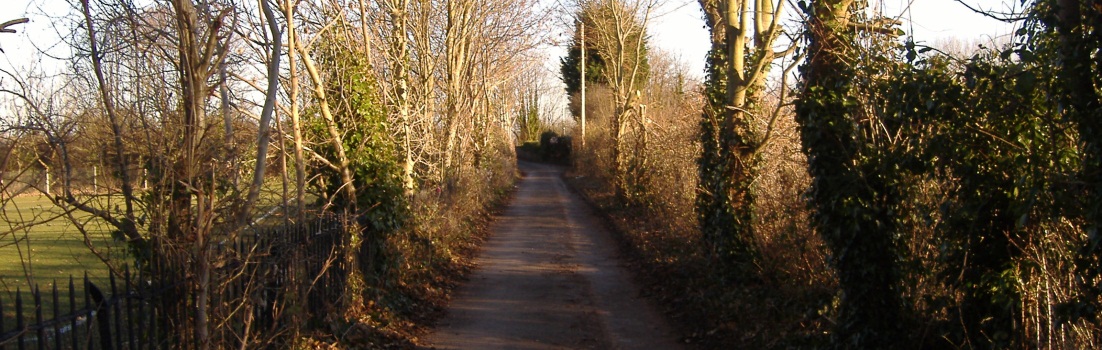
And oftentimes follows quiet country roads.

And with fabulous flowers along the way.

And sometimes the route will plunge through the woods.

Or will follow a quiet creek.

And as your pace slows and you start to connect with the world around, you’ll notice all the little things such as thousands of insects hovering above the creek.

Or caterpillars gathering for their next stage of life.

and wonderful wildflowers throughout your entire journey.

And on the same day I saw this fox, I saw a wild boar, two deer, and dozens of rabbits.

And throughout the day, you’ll be passing through small settlements.

And sometimes you’ll only brush by them without walking through them.

Early in the walk, you’ll see Canola in full blossom.

Later in the walk the Canola blossoms will have blown away and the seed pods will begin to form.

Earlier in the walk, the Corn was just being planted and farmers were using air cannons or scarecrows to keep birds from eating the seed.

Some farmers even used kites in the shape of hawks to scare away birds.

By the end of the walk, the Corn was starting to come up!

And you might even pass a farmer spreading manure in his field.

With all of this going on everyday, it’s no wonder that you grow to love the walk as it fills you up with an overwhelming sense of peace.

In addition to walking in nature, you’re also walking through history. On my third day of walking, I walked through the very small town of Fierbois. This is where Jeanne d’Arc found her sword to begin her journey. Unfortunately, the light was not good when I took this picture, But this is a statue of Jeanne in front of the church (Sainte-Catherine-de-Fierbois) where she found the sword.

On the very next day (fourth day), I passed this Neolithic Dolmen south of Sainte-Maure.

Two days later, on my sixth day, I passed the remains of a Roman theater.

Later that same day, I stayed in the Halte Pelerin in the small town of Dissay – almost across the street from this fabulous Chateau complete with an actual moat filled with water. This once was the home of the Archbishop of Poitiers.

And if this isn’t enough, much of the route from Dissay to Poitiers followed an old Roman road!

When you reach Poitiers, you are in the middle of history and will find the enormous Cathedrale Saint-Pierre.

The inside is incredible.

with fabulous windows!

The outside details, too, are amazing.

On the next day, I left Poitiers to follow an alternative route to Liguge to spend the night at the Abbaye Saint-Martin.

When you enter the town of Liguge, there is a statue of Saint Martin cutting his cloak in half to share with a stranger. (Saint Martin was a Roman soldier before he entered the church.)

On my 11th day, I entered town of Melle which is famous for its Romanesque Churches. That’s Saint-Pierre up ahead.

Saint-Pierre

Some of the detail at the entry of Saint Pierre.

Saint Hilaire is a UNESCO designated World Heritage Site.

It’s most famous for this portal.

After Melle, my next town was Aulnay with it’s fabulous church – Saint-Pierre.

Like all of the churches, it’s details are fabulous.

But the most interesting is the image of Saint-Pierre being crucified upside down.

After Aulnay, my 14th night was spent in Saint-Jean-d’Angely. Angely’s Halte Pelerin was located within the Royal Abbey complex. This picture was taken from the front door of the Halte Pelerin.

Immediately next door to the Royal Abbey is a church that was never finished. The French Revolution stopped it’s construction.

And when you leave Angely, you get to pass through this wonderful portal.

When you leave Angely you’ll be passing through grape vines for making Cognac and will come across this amazing church in the small town of Feniox.

The church’s most unusual feature is it’s companion Lanterne des Morts (Lantern of the Dead).

As you can see, Fenioux has a Mairie, it’s church, and absolutely nothing resembling a service or a place to get anything to eat.

On my 16th day on the Voie de Tours, I walked from Saint-Hilaire back to the GR655 and started walking from Juicq to Saintes. As you can see, both the day and setting were gorgeous.

Along the way are the remains of an honest-to-goodness Roman Aqueduct.

And at the end of the day, I reached Saintes on the Charente River.

Saintes also has an actual Roman Triumphal Arch.

My final destination of the day was the town’s Halte Pelerin located within the Basilique Saint-Eutrope. (The Basilica is another UNESCO World Heritage Site.)

But almost within a stones throw from the Basilica are the remains of an actual Roman Coliseum. You can see how close it is to the Basilica.

And here is the Halte Pelerin inside the Basilica. This was one of the very few times I actually shared a room with a fellow Pilgrim (Jean-Robert from Paris).

My 17th and last day on Voie de Tours was walking from Saintes to Pons. Along the way, there were these remains of a Roman Theater.

Just before entering Pons, there was this interesting tower. I never found out what it is – let me know if you know what it is.

Pons most notable feature is its massive Donjon.

And here’s the view from the top!

From the Donjon, I passed another impressive church on my way to the town’s Halte Pelerin.

And this statue of Pilgrims going to Santiago came soon after.

My walk along the Voie de Tours ended right in front of a medieval Pilgrim Hospital. The Halte Pelerin is immediately to the left.

This sign is just inside the portal of the old Pilgrim Hospital. “Vers La Lumiere” – “Towards the Light”
I am so grateful for the opportunity to walk Towards the Light, and my hope is that you too have a chance to walk Towards the Light.
October 13, 2026 at 6:47 am
Thank you David for encouraging me to read this lovely travel piece. I found most endearing the peace and sense of presence you opened into. Hallelujah!
May 26, 2026 at 10:46 am
Thank you for sharing your walking experience on the Voie de Tours. My sis and I walked a small portion of Voie d’Arles in March 2026, and you mentioned the signage problem on this chemin is also true on the chemin d’Arles which was frustrating at times. I was hoping this would be our next little walk, but I will look closely to the Cele variant instead.
May 26, 2026 at 10:59 am
If your French is better than mine, and if you reserve ahead and carry some food, you might do fine on this walk – thanks for writing, DR
May 24, 2026 at 2:55 pm
David, here is the link to Ann Sieben’s Mendicant Pilgrim website with information about two walks to Tours — one from Zaragoza and one from Utrecht. It is possible to join the group at any point along the way. https://www.societyofservantpilgrims.com/upcoming-events/via-sancti-martini-utrecht-tours
May 24, 2026 at 4:36 pm
Thanks for sending
May 24, 2026 at 2:56 am
Fabulous Post. This is something I always wanted to do but a combination of serious infection that did inner ear damage, followed by an accident that did serious head damage has left me unable to go.
According to my Google search, this is what you saw, but you will have to do your own translating:
Pons (Charente-Maritime) tour avec statue du Sacré-Coeur, à l’entrée du bourg
May 23, 2026 at 9:13 pm
What an amazing experience! The Camino is on my bucket list.
May 23, 2026 at 8:31 pm
An interesting post and great photos. I thought France was the gastronomic capital of the world so I’m surprised that you had difficulty finding restaurants/cafes/grocery stores along your walk.
Have you thought about doing a pilgrimage from London to Canterbury (following the Canterbury Tales route?)
May 23, 2026 at 9:37 pm
Thanks for the comment. There are plenty of places to eat in France in the larger towns. But the vast majority of the time on the Voie de Tours is in very rural France where services and businesses are scarce. And yes, I’ve thought about Canterbury but haven’t acted on it.
May 22, 2026 at 9:52 pm
I love love love this, David! We had many similar experiences while walking the Vezelay Chemin last May— we were there a year ago. I could write a lot more, but this will be it for the night! I’ll forward to Paula who is now the Albuquerque Chapter Coordinator for American Pilgrims, and maybe she can put a link in the newsletter. I’ll see if I can add it to the FB page.
May 22, 2026 at 7:32 pm
Very enjoyable to read. Thanks for all the marvelous pictures!